.png)

You used to crush this workout. Three months ago, maybe six months ago, this session felt manageable. Challenging, yes, but doable. Now it feels impossible. Your heart rate spikes immediately. Your legs feel heavy. Every set is a grind. You finish, but barely, and you're convinced of one thing: you've lost it. You're out of shape. You've backslid, fallen off, lost your fitness.
Except there's another explanation that's far more likely, and far more fixable: you're not deconditioned. You're under-recovered. And the difference between those two things matters enormously.
When Stress Rewrites Reality
Here's what most people don't understand about perceived effort: it's not an objective measure of your physical capacity. It's your nervous system's interpretation of how much work you're doing relative to how much stress your body is already managing.
When you're well-rested, adequately fueled, and operating from a baseline of low stress, a challenging workout feels hard but achievable. Your body has the resources to meet the demand. Your nervous system can allocate energy to the task without sounding alarm bells.
When you're sleep-deprived, emotionally taxed, nutritionally depleted, or carrying high ambient stress, that same workout feels exponentially harder — not because you've lost fitness, but because your nervous system is already working overtime just to maintain baseline function. The workout isn't harder. Your capacity to handle it has temporarily decreased.
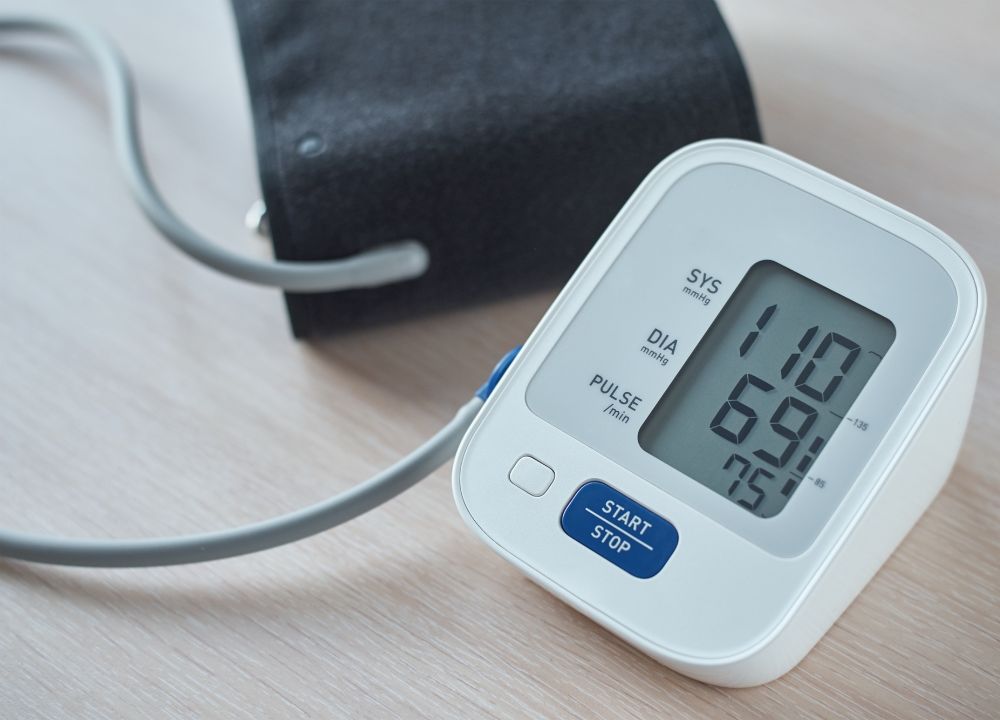
This shows up in measurable ways. Heart rate variability drops, indicating your autonomic nervous system is in a state of high arousal. Resting heart rate increases. Heart rate during exercise spikes higher and faster than usual. Perceived exertion ratings for the same objective workload increase significantly. Your body is telling you, loudly, that it's operating from a deficit.
The trap is interpreting these signals as evidence of lost fitness rather than what they actually are: evidence of accumulated fatigue. And when you interpret them as lost fitness, you do exactly the wrong thing. You train harder, push more, add volume, trying to "get back" to where you were. Which digs the hole deeper.
Nervous System Fatigue Is Real Fatigue
Physical fatigue — the kind you feel in your muscles after a hard set of squats — is relatively straightforward. It's local, it's acute, and it resolves with rest. Nervous system fatigue is more insidious. It's systemic, it accumulates slowly, and it doesn't resolve with a single rest day.
Your central nervous system is responsible for every voluntary contraction, every coordinated movement, every signal that tells your muscles to fire. When it's fresh, it operates efficiently. Signals are crisp, recruitment is optimal, and you can access your full strength and power.
When it's fatigued, everything gets muddy. Muscle recruitment becomes less efficient. Coordination suffers. Power output decreases even though your muscles are technically capable of more. You feel weak, not because your muscles have atrophied, but because your brain's ability to activate them has been compromised.
This happens from training itself — particularly high-intensity, heavy, or highly technical training — but it also happens from non-training stress. A demanding work project, relationship conflict, financial pressure, poor sleep, travel, illness — all of these tax your nervous system in ways that reduce its capacity to drive performance.
The cruel irony is that nervous system fatigue often doesn't feel like classic tiredness. It feels like inadequacy. Like you should be able to do this. Like something is wrong with you. And because it doesn't announce itself clearly, people miss it entirely and keep pushing.
Training Through High-Stress Seasons
Let's be specific about what high-stress seasons look like, because most high-achieving adults are in one right now and don't realize it.
You're in a high-stress season if:
- You're sleeping less than seven hours consistently
- Work demands have increased significantly
- You're managing a major life transition (move, new job, relationship change, new child)
- You're dealing with illness or injury, even if it's minor
- You're traveling frequently or across time zones
- You're in a period of grief or emotional processing
- Your calendar is so full you're eating irregularly or skipping meals
These are not excuses to skip training. But they are reasons to adjust expectations and modify approach. The workout plan that worked beautifully when you were well-rested and stable will break you when you're operating from depletion.
High-stress seasons require high-awareness training. Less volume, more recovery, lower intensity, or a willingness to modify sessions based on how you actually feel rather than what the program says. This isn't giving up. This is intelligent load management. Professional athletes do this routinely. They periodize based on the total stress they're managing, not just training stress.
The mistake is treating your body like a machine that should perform consistently regardless of context. It won't. It can't. And expecting it to only accelerates the spiral.
Signs You Need Recalibration, Not More Conditioning
How do you know if you're genuinely deconditioned versus under-recovered? The patterns are different, and recognizing them prevents months of spinning your wheels.
You're likely under-recovered if:
- Your decline in performance was sudden, not gradual
- You feel tired before sessions even start, not just during them
- Your resting heart rate is elevated
- You're unusually irritable, anxious, or emotionally flat
- Small tasks feel disproportionately difficult
- You're getting sick more often or taking longer to recover from illness
- Sleep quality has declined even though you're exhausted
- Motivation for training has disappeared despite previously loving it
You're likely deconditioned if:
- You took significant time off from training (weeks or months)
- Your decline in performance has been gradual over time
- You feel fine at rest but lack capacity during exercise
- Your performance is consistently lower but effort feels appropriate
- You're not experiencing other signs of systemic stress
The distinction matters because the solutions are opposite. Deconditioning requires progressive overload — carefully building back capacity over time. Under-recovery requires rest, stress management, and potentially a temporary reduction in training load.
Applying the wrong solution to the wrong problem is how people end up injured, burned out, or stuck in frustrating plateaus that seem unsolvable.
Short-Term Resets That Actually Work
If you've identified that you're under-recovered, the good news is that recalibration doesn't require weeks or months off. Strategic, short-term resets can restore capacity surprisingly quickly.
The Deload Week: One week of reduced volume and intensity — roughly 50% of your normal workload. Keep the movement patterns, drop the weight and reps. This maintains skill and habit while giving your nervous system space to recover. For most people under moderate fatigue, one week is enough to see significant improvement.
The Sleep Sprint: One week of making sleep the absolute top priority. Eight to nine hours minimum, consistent bedtimes, no compromise. Turn down social obligations if needed. This single intervention often produces dramatic improvements in how training feels.
The Stress Audit: Identify the three biggest stressors in your life right now that aren't training. Pick one and actively reduce it for two weeks. Delegate the project. Have the difficult conversation. Set the boundary. You can't eliminate life stress, but you can often reduce one vector enough to create breathing room.
The Nutrition Reset: If you've been under-eating or eating inconsistently, two weeks of deliberate, adequate fueling can change everything. More carbohydrates around training, more total calories overall, consistent meal timing. Your body will respond fast when you stop asking it to perform on empty.
The Volume Drop: Instead of taking time completely off, cut your training frequency in half for two weeks. Three sessions become one or two. Maintain intensity if it feels good, but give yourself far more recovery time between sessions. This often works better than complete rest because it maintains the training stimulus without the accumulated fatigue.
These aren't permanent changes. They're recalibrations. The goal is to break the cycle of accumulated stress, restore your nervous system's capacity, and return to normal training from a place of actual readiness rather than chronic depletion.
The Permission You Need
High-achieving people struggle with this more than anyone. You're used to pushing through. You've built careers and lives on your ability to override discomfort and deliver anyway. That skill serves you in many contexts. In training, it can destroy you.
You have permission to acknowledge that you're dealing with a lot right now. You have permission to train at 70% when life is at 130%. You have permission to take a deload week without it meaning you've given up. You have permission to recognize that your body is not a machine, and that asking it to perform optimally during a period of high stress is unrealistic.
None of this makes you weak. It makes you smart.
The person who recognizes they're under-recovered and adjusts accordingly will be training consistently five years from now. The person who interprets every sign of fatigue as evidence they need to push harder will be injured, burned out, or done with training entirely.
You're not out of shape. You're asking a depleted system to perform at capacity. The solution isn't more effort. It's more awareness, more rest, and more willingness to match your training to your actual state rather than your imagined ideal.
Recalibrate. Recover. Then return. That's not weakness. That's exactly how sustainable fitness works.
Strong Starts Here.
.jpg)